The History of Radio: From Wireless Waves to the Apps in Your Pocket
The History of Radio — From Hertz to Streaming Apps
Table of Contents
- The Story of Radio
- The Science That Made Radio Possible
- From Wireless Telegraphy to Broadcasts
- The First Human Voice on the Air
- Radio and the Titanic
- The Golden Age of Radio
- FM, the Car Radio, and Radio on the Move
- The Transistor Revolution
- From Airwaves to the Internet
- Why Radio Still Matters
- Download GlobeTuner
The Story of Radio
Few inventions have shaped the modern world as quietly and completely as radio. It carried the first voices across oceans, kept families company through wars and depressions, gave music a mass audience, and eventually shrank from a piece of living-room furniture into a feature on the phone in your pocket. This is the full story of how radio came to be, the people who made it possible, and how it evolved into the streaming apps we use today. Today that same story lives on in every global FM radio app that lets you stream live radio online from anywhere in the world.
🎧 Listen Anywhere with GlobeTuner
Stream live FM and internet radio from India and around the world. Every station on the planet, and you can add any station yourself. No login, no sign-up, and minimal ads.
The Science That Made Radio Possible
The story begins not with an inventor but with a theory. In the 1860s, Scottish physicist James Clerk Maxwell predicted mathematically that invisible electromagnetic waves travel through space at the speed of light. His equations suggested that light, radio waves, and other forms of radiation were all part of the same electromagnetic family, differing only in wavelength.
Two decades later, between 1886 and 1888, German physicist Heinrich Hertz proved him right. In a series of careful laboratory experiments, Hertz generated and detected radio waves, measured their properties, and showed they behaved just like light, reflecting, refracting, and forming standing waves. He had turned Maxwell's mathematics into something you could observe on a workbench. Fittingly, the unit of frequency, the hertz, is named after him.
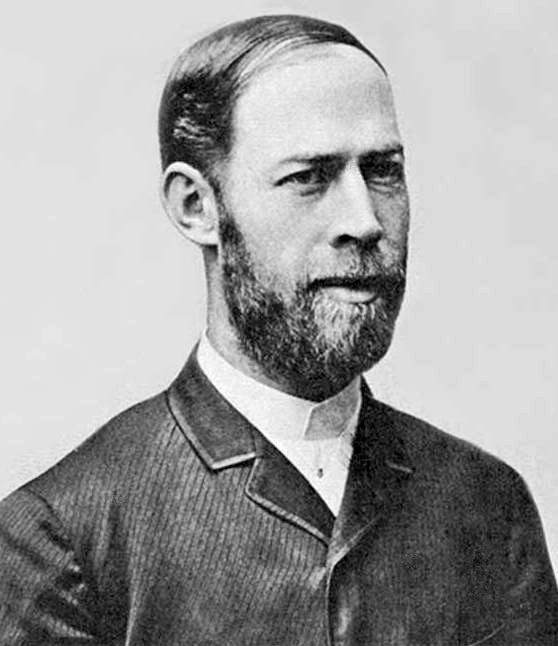 Heinrich Hertz, whose experiments proved radio waves exist. (Public domain)
From Wireless Telegraphy to the First Broadcasts
In the 1890s a young Italian inventor named Guglielmo Marconi set out to turn this laboratory curiosity into a practical communication system. Where scientists saw a fascinating phenomenon, Marconi saw a business. By raising his antennas high, grounding his equipment, and steadily refining his transmitters and receivers, he pushed signals over ever greater distances—first across a room, then across fields, then across the English Channel.
His crowning achievement came in December 1901, when he reported receiving a wireless signal—the Morse code letter "S"—sent across the Atlantic Ocean from Cornwall in England to Newfoundland. The feat electrified the world and proved that radio could span continents. Early radio was used for what was called "wireless telegraphy": it sent Morse code dots and dashes rather than sound, and it quickly became indispensable for communicating with ships far out at sea, where no telegraph cable could reach.
 Guglielmo Marconi with early wireless apparatus. (Public domain)
The First Human Voice on the Air
Morse code was powerful, but the dream was to transmit actual voice and music. That leap came from a handful of determined inventors in the early 1900s. Canadian-American engineer Reginald Fessenden developed the continuous-wave transmitter needed to carry sound, and by 1900 he had transmitted speech over a short distance. According to accounts from his family, on Christmas Eve of 1906 he made one of the first voice-and-music broadcasts from Brant Rock, Massachusetts, reportedly playing the violin and reading from the Bible to astonished ship operators at sea.
Around the same time, American inventor Lee de Forest was experimenting with voice transmission and, crucially, invented the Audion, an early vacuum tube that could amplify weak signals. Amplification was the missing ingredient that would eventually make loud, clear, reliable radio possible. De Forest was such an enthusiast that he earned the nickname "the father of radio."
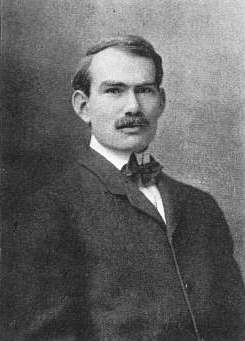 Lee de Forest, inventor of the Audion amplifying tube. (Public domain)
Radio and the Titanic: Safety at Sea
Radio's value was proven dramatically, and tragically, at sea. When the Titanic struck an iceberg in April 1912, its wireless operators sent out distress calls that summoned the rescue ship Carpathia, helping save around 700 survivors. Yet the disaster also exposed serious problems: amateur operators clogged the airwaves, some ships had switched off their radios for the night, and there were no clear rules for emergency traffic.
The response was regulation. The United States had already passed the Wireless Ship Act of 1910, requiring radio equipment and operators on many passenger ships. After the Titanic, the Radio Act of 1912 tightened the rules further, giving priority to distress signals and requiring stations to be licensed. Radio was no longer a hobbyist free-for-all; it was becoming a regulated public utility.
 The RMS Titanic, whose wireless distress calls helped rescue survivors in 1912. (Public domain)
The Golden Age of Radio
Everything changed in 1920, when regular entertainment broadcasting began. In the United States, station KDKA in Pittsburgh received a commercial license and famously aired the results of the 1920 presidential election. Within a few short years, radio stations sprang up across America and Europe, and receivers moved from the workbenches of hobbyists into ordinary living rooms.
Through the 1920s and 1930s, radio became the beating heart of the home. Simple crystal sets, which needed no power and could be built by almost anyone with a few parts, gave way to powerful vacuum-tube receivers with built-in loudspeakers. By the late 1920s the first battery-free radios could plug straight into a wall socket. Families gathered each evening for news, live music, comedy, drama, and sports. Radio ownership exploded from roughly two in five American homes in 1931 to four in five by 1938, even in the depths of the Great Depression.
 An early crystal radio set, powered only by the energy it captured from the air. (Public domain)
This golden age reshaped culture, politics, and business. Politicians learned to speak directly to citizens in their homes. Advertisers discovered a vast new audience. The music industry, at first terrified that free broadcasts would destroy record sales, eventually made peace with radio through licensing organizations that collected royalties whenever songs were played on air.
FM, the Car Radio, and Radio on the Move
Two innovations freed radio from static and from the living room. In 1933 the brilliant and famously combative engineer Edwin Armstrong patented FM (frequency modulation) radio. FM dramatically reduced the crackle and interference that plagued AM broadcasts and delivered far richer, clearer sound—the quality music lovers still associate with FM today.
Meanwhile, radio was going mobile. The first car radios appeared in the 1920s, and by 1930 sets small enough to install in most automobiles reached the market, turning the daily commute into a soundtracked experience. During World War II, radio proved its strategic importance too, carrying news, propaganda, coded military messages, and navigation signals that guided ships and aircraft.
The Transistor Revolution
If FM improved how radio sounded, the transistor changed where you could take it. In 1954 the Regency TR-1 became the first commercially produced transistor radio—small, rugged, and battery-powered, with no fragile tubes to burn out. Sony followed with its own pocket models, and by 1957 the mass-produced transistor radio had arrived. Suddenly radio was something a teenager could carry to the beach or tuck under a pillow at night. Over the next two decades, transistors replaced tubes almost everywhere, and later integrated circuits shrank radios further still.
 The Regency TR-1 (1954), the first commercially produced transistor radio. (Public domain)
From Airwaves to the Internet: Stream Live Radio Online
The most recent chapter is the one we are living in now. As the internet matured, radio broke free of the broadcast tower entirely. Internet radio and streaming let a station in one country reach listeners on the other side of the planet, without a transmitter powerful enough to cross the horizon. Digital broadcasting, satellite radio, podcasts, and smartphone apps have multiplied the ways we listen.
Today, a single app can put thousands of live stations from every corner of the world into one tap, letting you hear a jazz station in New Orleans, a news channel in London, or a local broadcast from your hometown while traveling abroad. What began as invisible waves crossing an ocean has become a global library of sound, available instantly, anywhere.
 A classic wooden radio set, an icon of radio's golden age. (Public domain)
Why Radio Still Matters
More than a century after Marconi's first transatlantic signal, radio remains one of the most resilient and accessible media on Earth. It survived the arrival of television, cassettes, CDs, and streaming, adapting each time rather than disappearing. It reaches places without reliable internet, keeps people informed during natural disasters when other networks fail, and still offers something uniquely human: a live voice, sharing a moment with countless strangers at once.
Whether you tune in over the airwaves or through an app on your phone, you are taking part in a story that stretches back to a spark of electricity in a nineteenth-century laboratory—a story that is still being written today.
Key Milestones in Radio History
Maxwell's Theory
James Clerk Maxwell predicts electromagnetic waves mathematically.
Hertz's Proof
Heinrich Hertz generates and detects radio waves in the lab.
Marconi's Signal
First transatlantic wireless signal — the letter "S" in Morse code.
First Voice Broadcast
Fessenden broadcasts voice and music on Christmas Eve.
Titanic & Regulation
Distress calls prove radio's value; Radio Act of 1912 follows.
Golden Age Begins
KDKA broadcasts election results, launching regular entertainment.
FM Radio
Edwin Armstrong patents FM, delivering clearer, static-free sound.
Transistor Radio
Regency TR-1 brings portable, pocket-sized radio to the masses.
Streaming & Global Radio
Apps like GlobeTuner put 50,000+ stations from every country in your pocket.
🎧 Listen Anywhere with GlobeTuner
Stream live FM and internet radio from India and around the world. Every station on the planet, and you can add any station yourself. No login, no sign-up, and minimal ads.
🎧 Download GlobeTuner Today — Be Part of Radio's Story
Stream 50,000+ live radio stations, thousands of podcasts, and audiobooks — all in one free, lightweight app. Join the next chapter of radio history.
Download GlobeTuner on Google Play
Free · No Login Required · Minimal Ads · 50,000+ Stations
Comments
Post a Comment